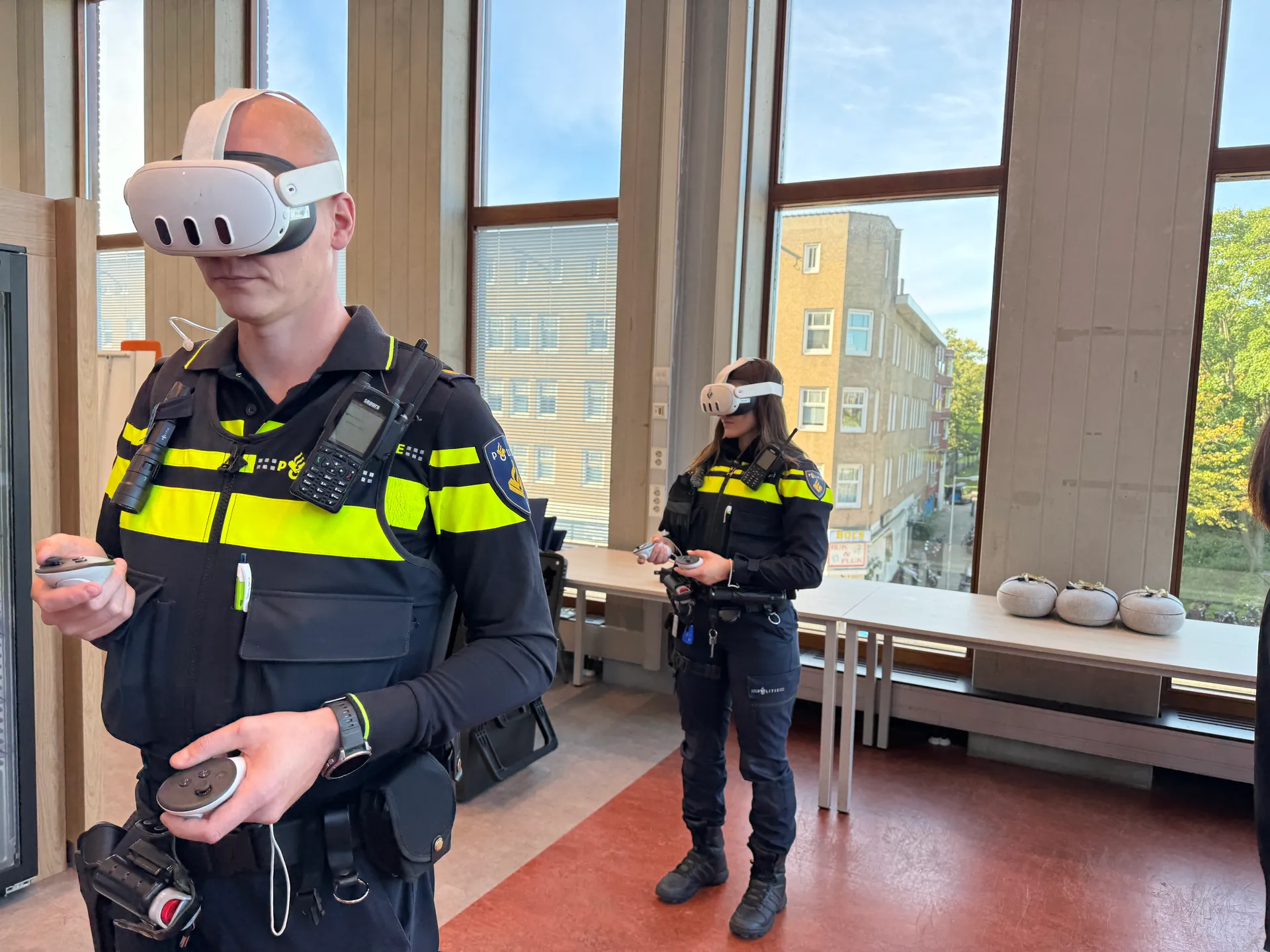
Crime Scene Management Training
Leading the design and delivery of a VR training that 2,000+ Dutch police officers can complete without help.
- Client
- Dutch Police
- When
- Jan - May 2025
- My role
- Project lead, Interaction design, UI design, Prototyping & testing, Client communication
- Result
- 2,000+ officers, almost no support questions
Context
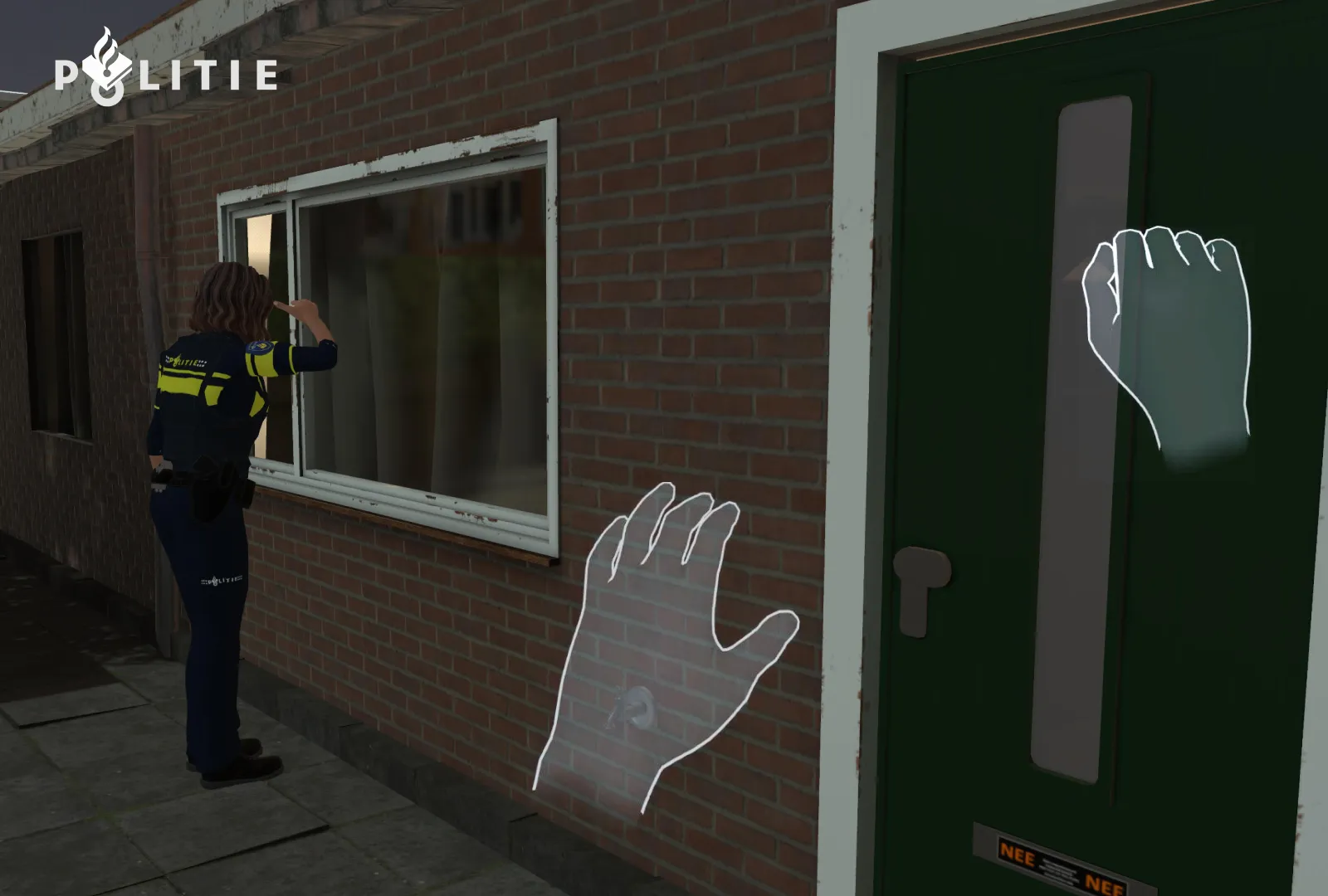
A collaboration between the Dutch Police, KOOS and VR Owl. KOOS developed the training concept and flow, then VR Owl took over the full VR design and production. The goal: turn that concept into a VR experience that works for officers with very different levels of technical and VR experience.
The challenge
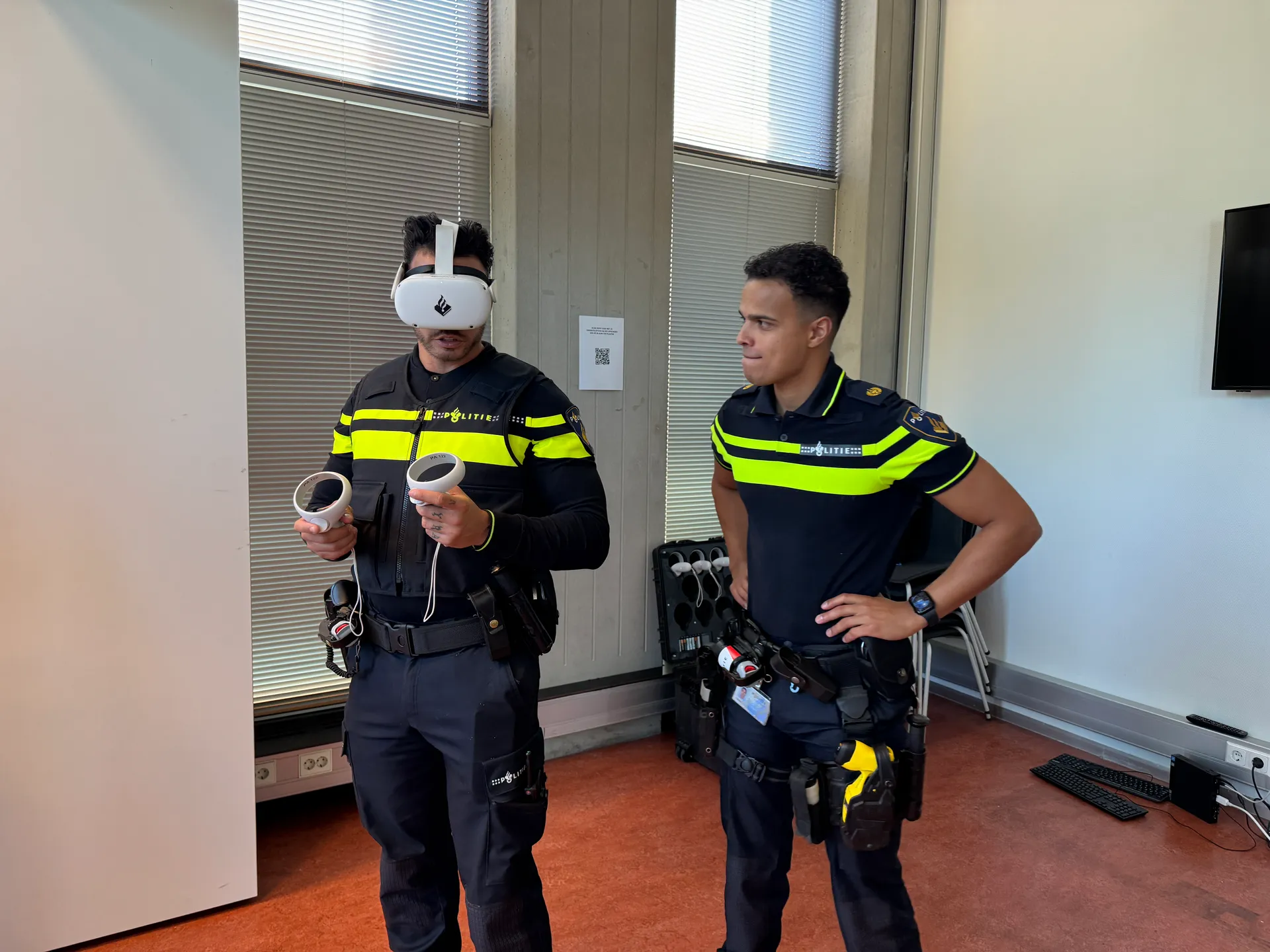
The Police already used several VR applications, and internal feedback showed officers often needed someone to help them through. This project had to break that pattern. Officers should be able to complete the training independently, never unsure what to do or where to go next.
Usability and clarity were treated as core requirements, not as nice-to-haves.
Designing for intuitive use
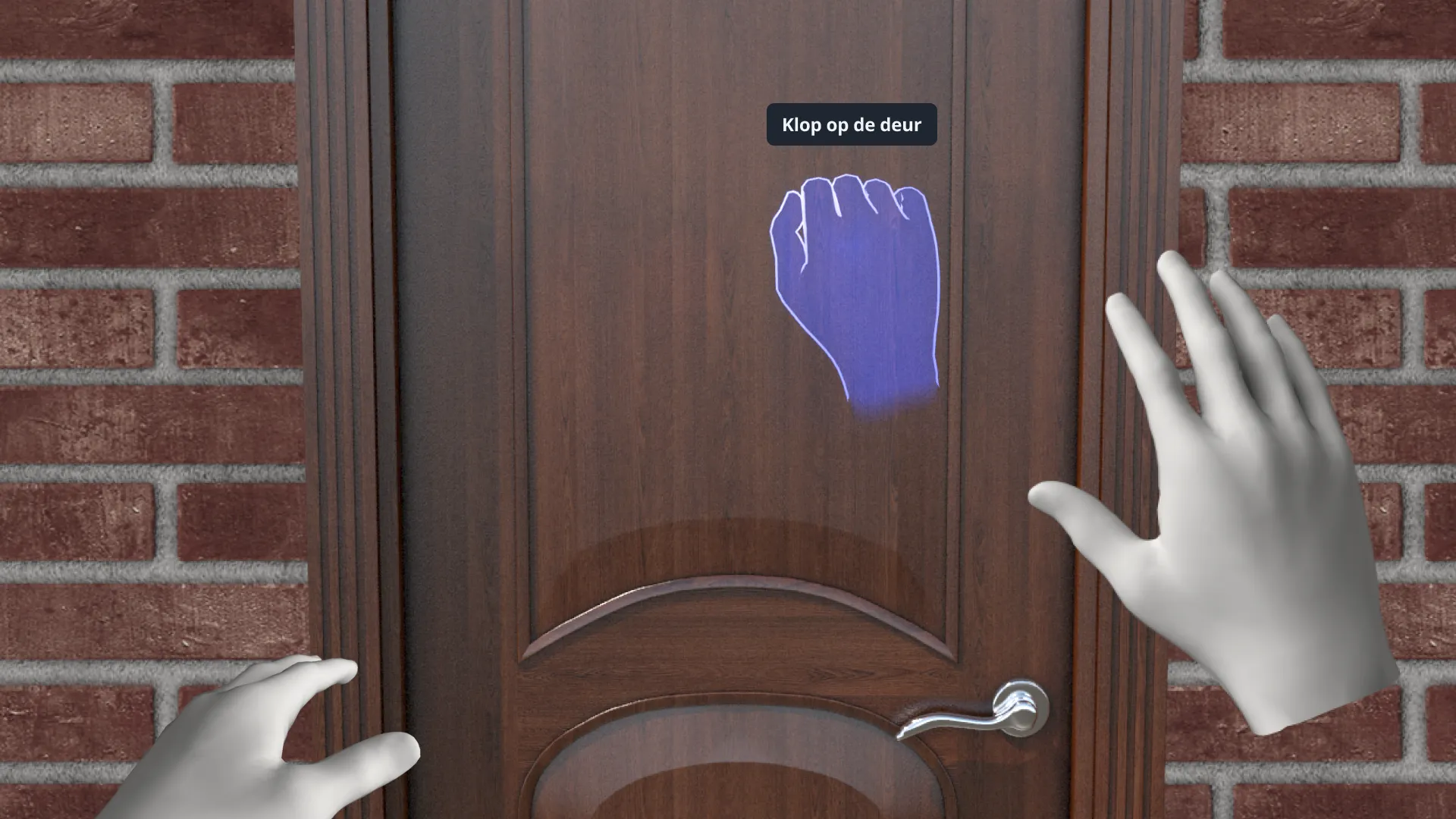
I started with a detailed design document that defined the interaction model, the guidance strategy and the overall structure. I chose interactions that felt natural, predictable and consistent throughout.
Every decision aimed to reduce cognitive load in VR: clear prompts, simple actions, strong visual cues, and interactions that match how people already think things work.
Prototyping and validation
I prototyped the interaction model early and tested it internally before full production. These tests confirmed that first-time VR users could get through the experience without help.
Feedback from those sessions led to small but important changes in interaction timing, the way users interact with the virtual world, visual cues and guidance moments.
UI and visual alignment
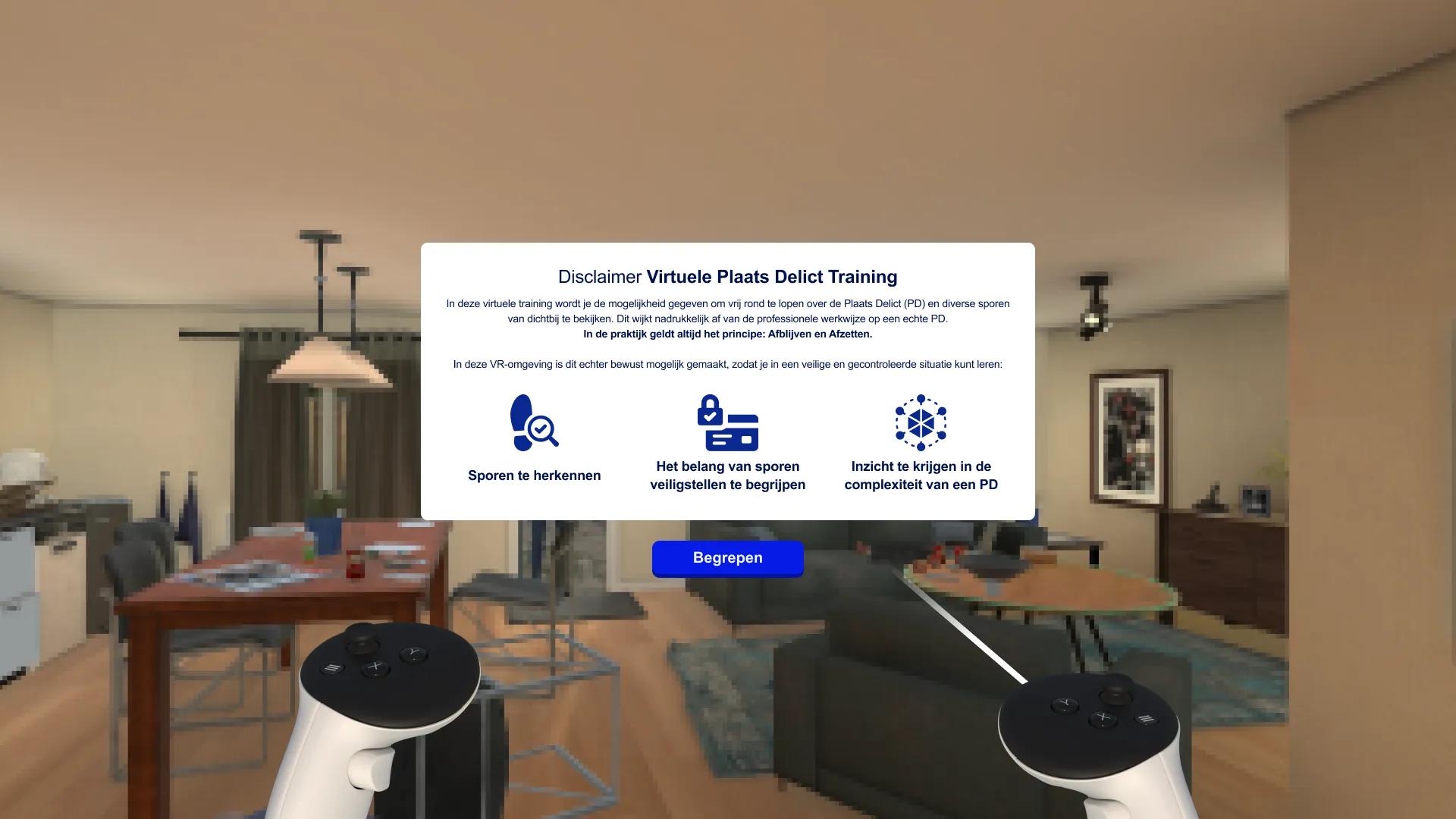
Once the interaction model held up, I designed a UI system based on the Dutch Police visual identity. The training feels familiar next to their other internal tools, while being tuned for legibility, contrast and hierarchy in a 3D environment.
Leading the project
Alongside the design work I led planning, set priorities, coordinated with developers and managed client communication. Regular check-ins with the Police surfaced feedback early, so I could turn it into clear tasks for the team. That kept the project predictable and focused on the usability goal.
Outcome
The training is being rolled out to more than 2,000 police officers. After delivery, the Police project manager told us they rarely get questions about how to use it: the exact problem earlier VR applications had.
We found Jeremy to be a highly professional and decisive project manager during the development of VR Blauw ter Plaatse. Jeremy was quick to respond, contributed ideas, and ensured that our wishes were accurately translated into the final product. And last but not least: Jeremy is simply a very pleasant person to work with.
Tim Theeboom, Project leader Extended Reality, Dutch Police