Scaling Training Production
Restructuring how a team designs and builds VR training, taking output from one product per quarter to one a month.
- Client
- VR Owl
- When
- 2025
- My role
- Process design, Team coordination, Framework structure, Documentation
- Result
- 3× team output per quarter
Context
VR Owl builds VR training for clients across many industries. As the number of projects grew, the team wanted to design and build modules more efficiently: lower development costs, and a reusable library of modules that could be sold as standalone products.
This internal project added structure and reuse to existing processes, while staying close to how the team already worked.
Finding the recurring patterns
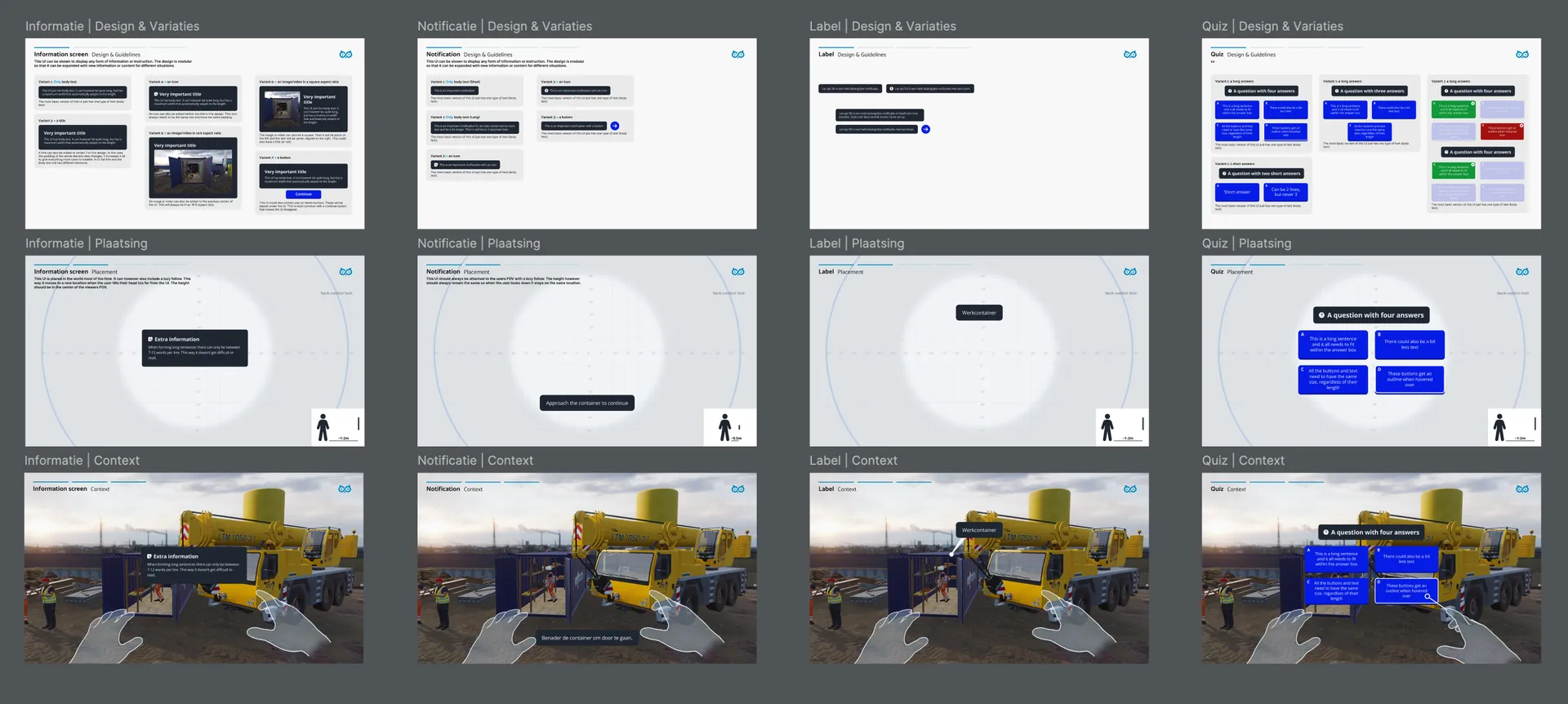
Across client projects, the same interaction patterns kept coming back: instructions, feedback moments, safety checks, confirmations, progress indicators. Each project designed them slightly differently, even though their purpose was the same. The first step was to map these elements and find where shared structure would help without taking away flexibility.
Structuring the framework
From that analysis I helped structure a modular UI and UX framework that formalises these patterns. It defines how common components behave, how users are guided through a training, and how interactions are sequenced. Components are brand-neutral by default, so client styling can be applied without changing their logic.
Building modules alongside client work
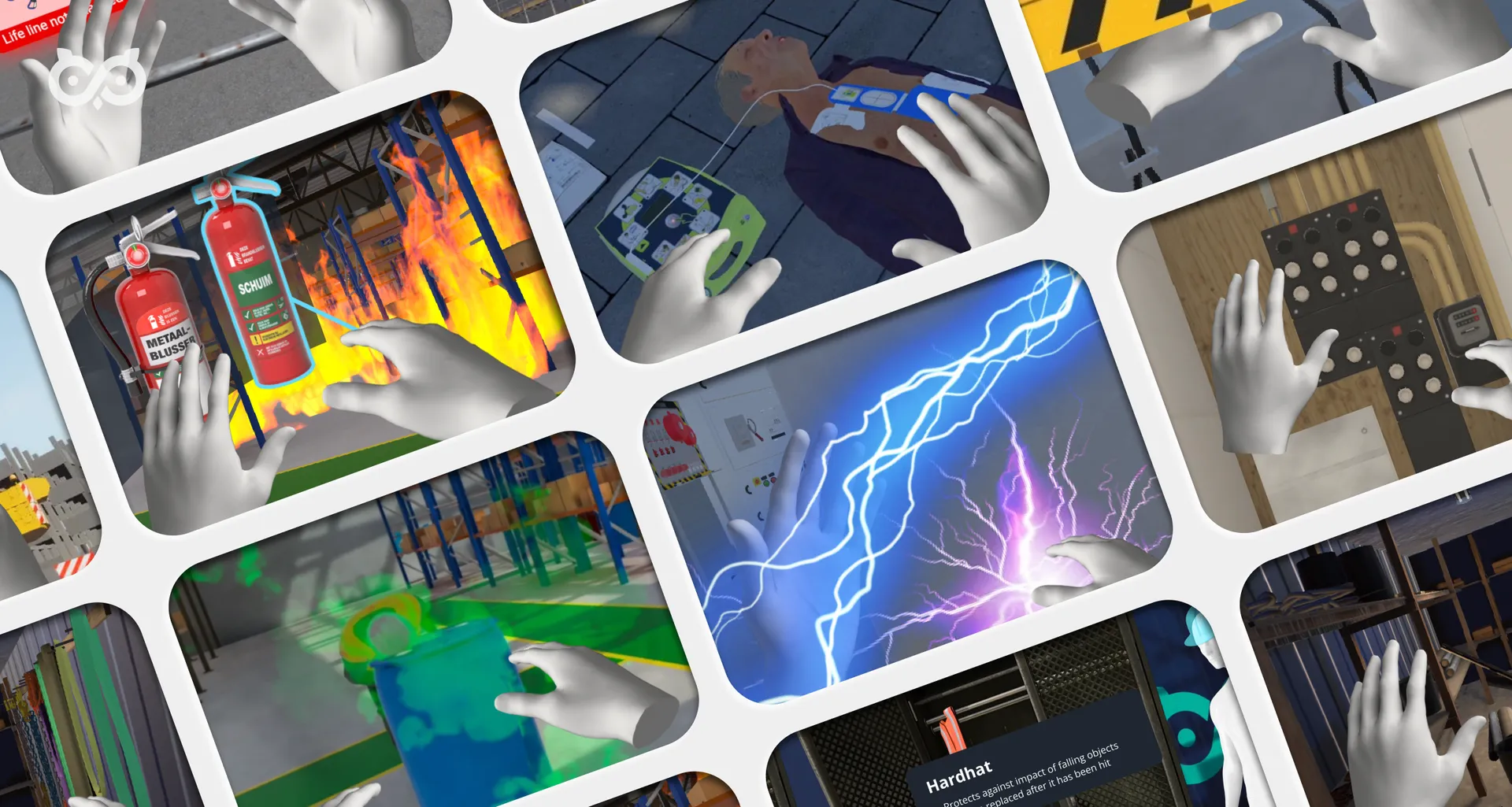
The framework was developed during real production. From early 2025, one internal module was made per quarter alongside client projects, so the framework was tested against real constraints. Modules covered topics like NEN3140, PPE, LOTOTO, Fire Safety and CPR, and each release fed improvements back into the framework.
Video courtesy of VR Owl
Working with the team
I worked closely with designers and developers, building on existing workflows rather than replacing them. Clear documentation and shared guidelines reduced rework, aligned expectations and made it easier to work on several projects in parallel.
Outcome
As the framework matured, internal production went from one module per quarter to three: from one every three months to one a month. Development overhead dropped, modules became more consistent, and a library of standalone training products became realistic.
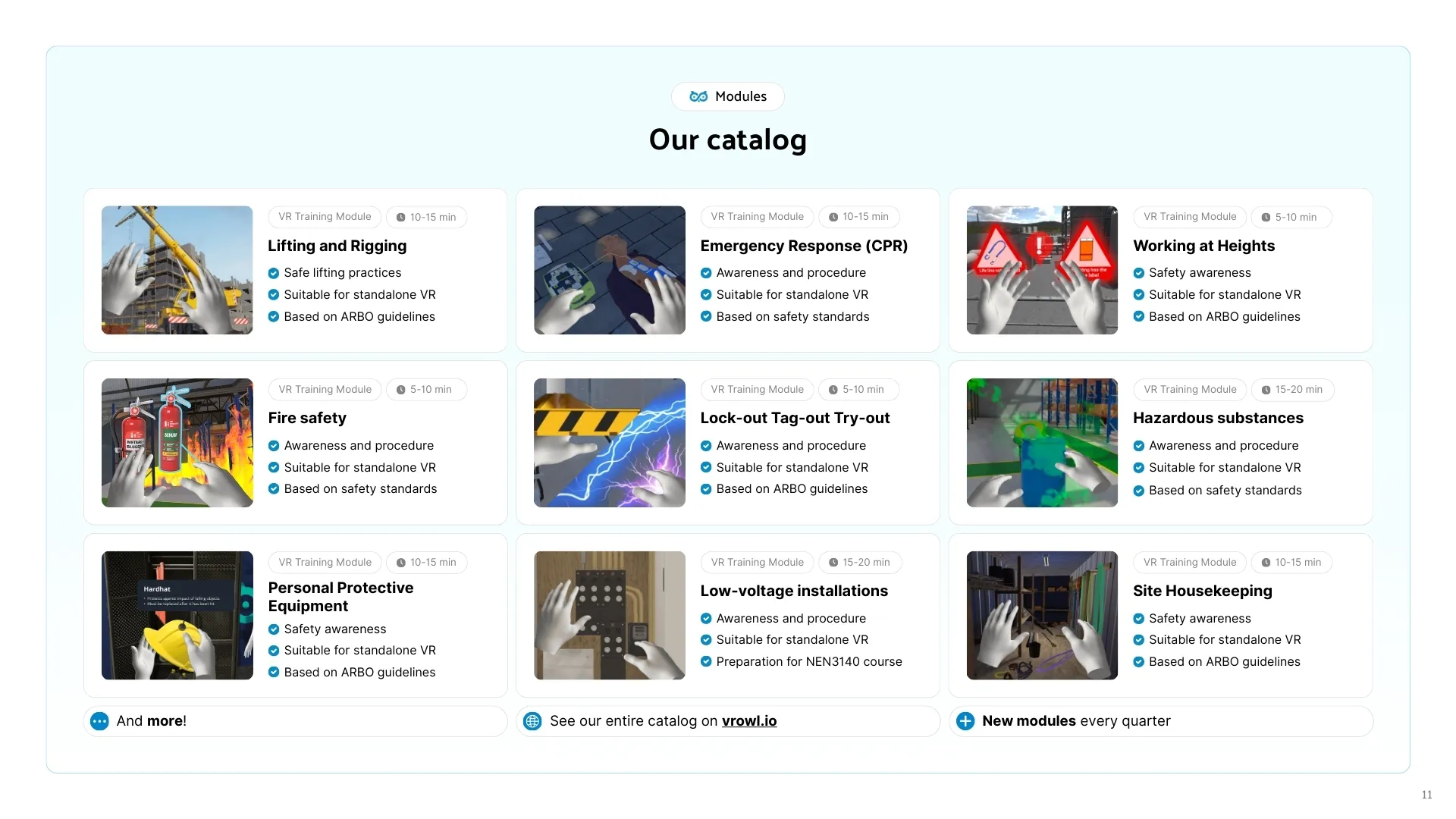
Image courtesy of VR Owl